

Plastic Tides
- Ed Pritchard

- Jun 12, 2019
- 2 min read
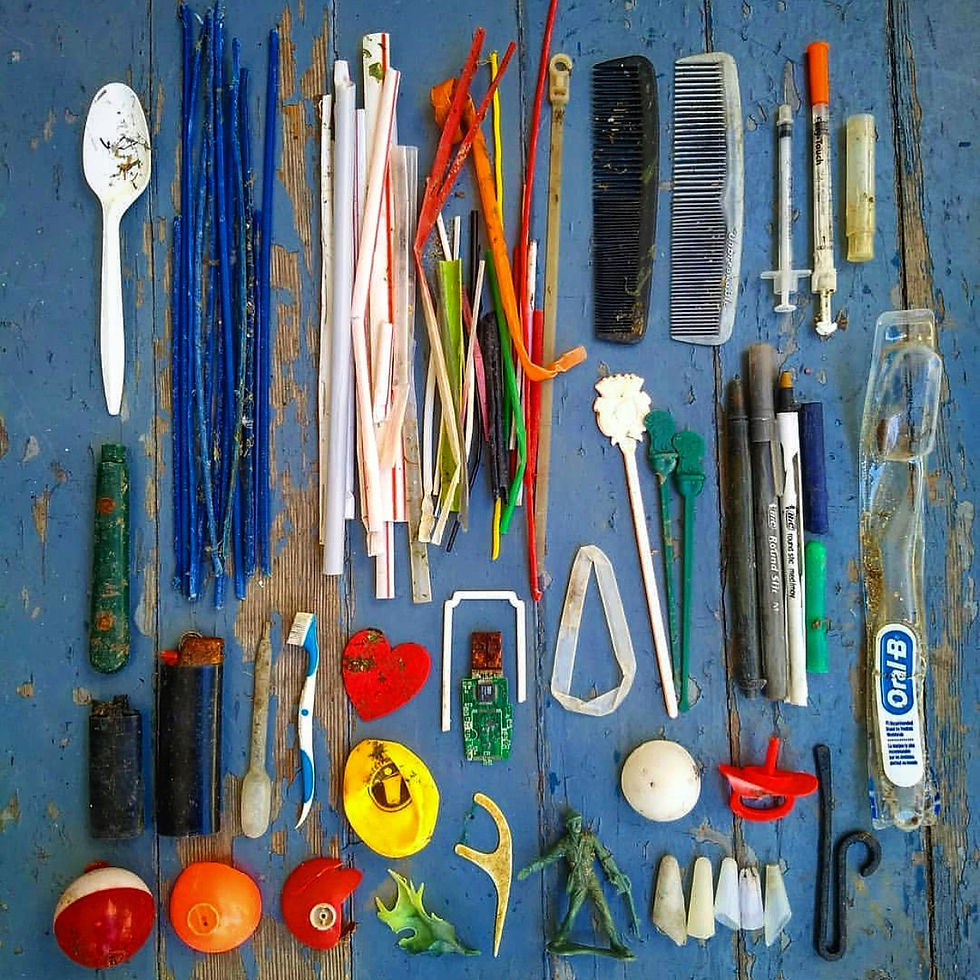
Plastic comes in many shapes, sizes, and colors. Plastic is also versatile, lightweight, flexible, moisture resistant, strong, and relatively inexpensive. Those are just some of the attractive qualities that have led the world’s population to consume the product at such a voracious pace that the current production rate is estimated to be at about 300 million tons a year. However, this product’s durability also means it is very slow to degrade and these materials that we’ve grown so accustomed to ultimately become waste with staying power. Over the last 65 years, a good amount of the plastic we’ve produced has found its way into the ocean, whether accidentally or deliberately. Consequently, there is now estimated to be upwards of five trillion pieces of plastic in our oceans and in some regions, plastic pieces outnumber plankton 6:1. Once in our marine environment, the plastic floats around the world, carried along by ocean currents and accumulating in huge concentrations at the surface in the world’s ocean gyres as well as in the deepest trenches where it slowly breaks down into increasingly smaller and smaller pieces, finding its way into every level of the marine food chain. The extent to which we, too, are being affected by the plastics that have become so ubiquitous in our environment—in our food, water and air—is still a topic being researched but is, without a doubt, a threat to our health.
So what can we do? The most impactful way is sending a message through your wallet by buying plastic-free products. Say no to the plastic straw. Seek eco-friendly and biodegradable alternatives. Buy your groceries at bulk food stores. Put those reusable bags back in your car. Refill that reusable water bottle. Participate in a shoreline cleanup. Buy a bamboo toothbrush. And just as important, share your knowledge of this issue and your plastic-free habits with others.


Comments